
Sweet peas are one of my favourite flowers to grow in the garden. They look beautiful, smell absolutely gorgeous and are perfect for cutting and bringing indoors. There is something lovely about having a vase of sweet peas on the kitchen table, especially when you’ve grown them yourself.
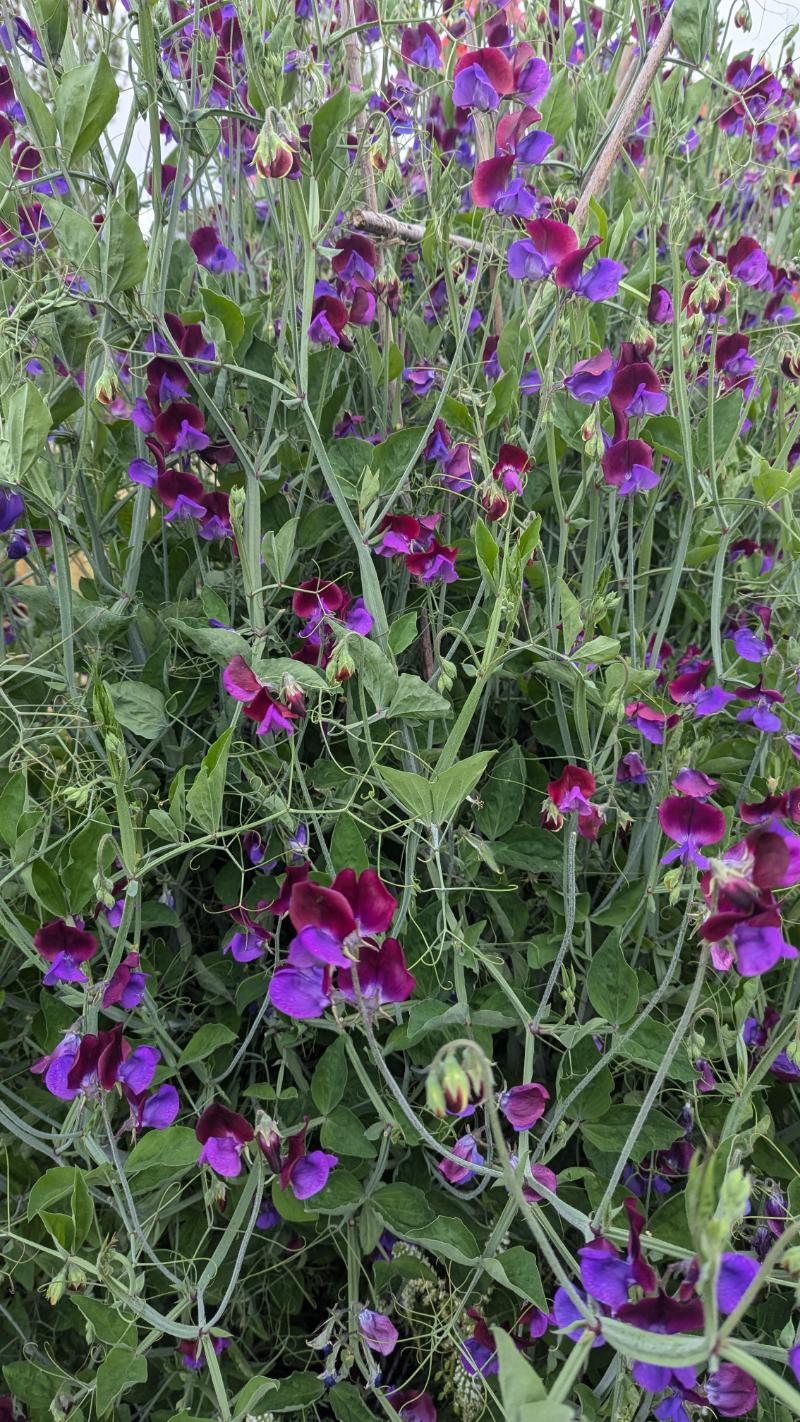
The good news is that you don’t need to buy new seeds every year. If you already have sweet peas growing in your garden, you can collect your own seeds and grow even more flowers next season. It’s easy to do, costs nothing and is a great way to keep your favourite varieties going.
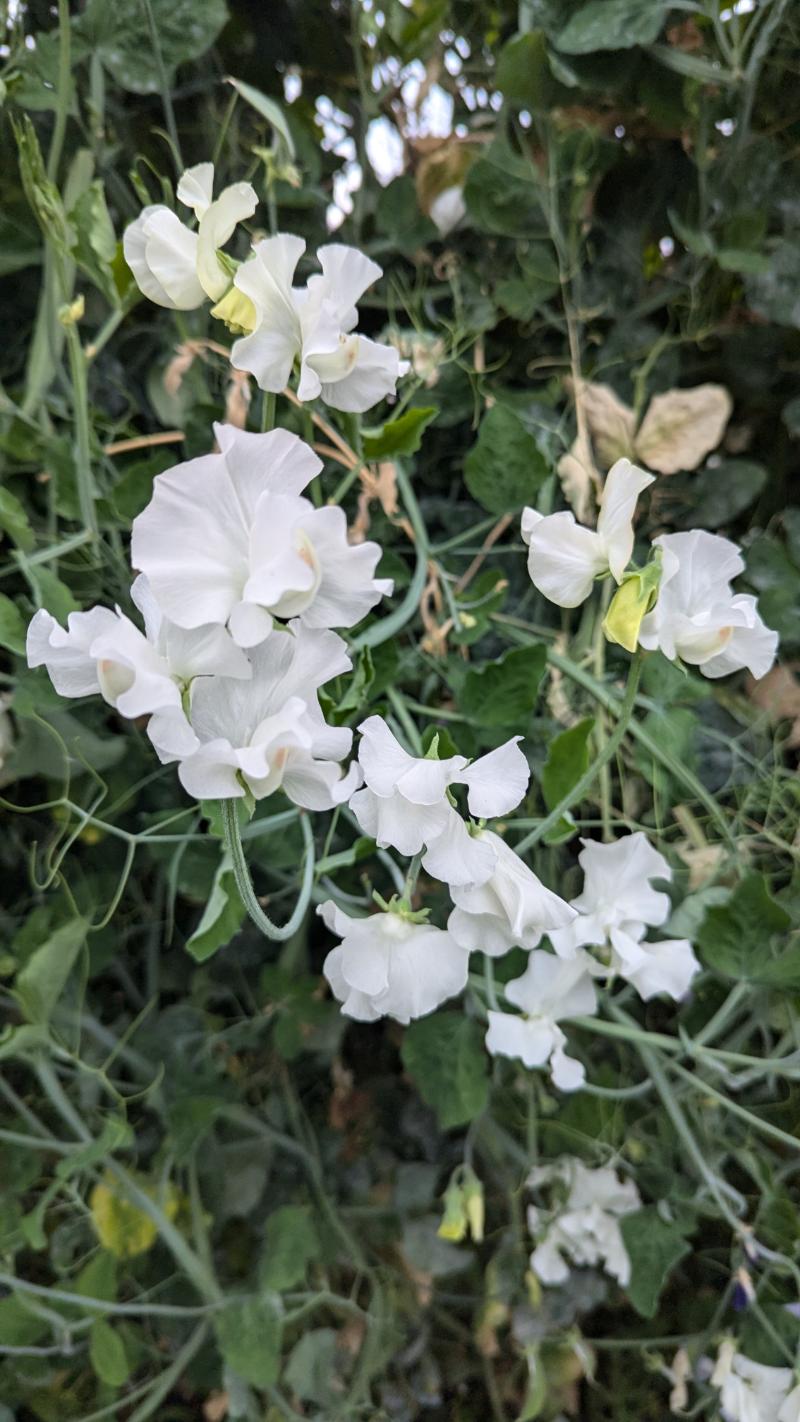
When to Collect Sweet Pea Seeds
The secret to collecting sweet pea seeds is knowing when to leave the flowers alone!
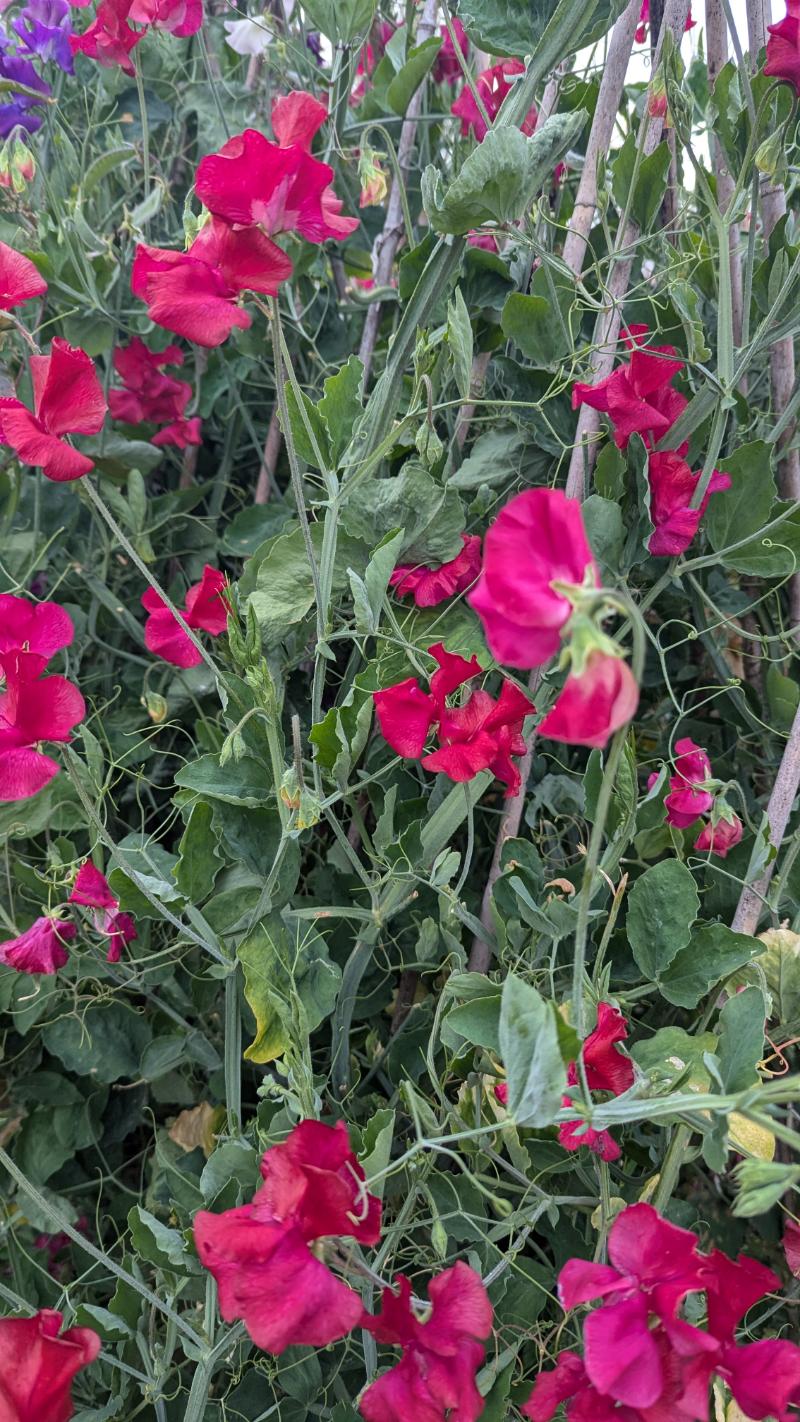
During the flowering season, I regularly deadhead my sweet peas to encourage them to produce more blooms. However, towards the end of summer, I like to leave a few flowers on the plants so that they can develop seed pods.
Once the flowers have faded, seed pods will begin to form where the blooms were. These initially look like small green pods and gradually grow larger as the seeds develop inside.
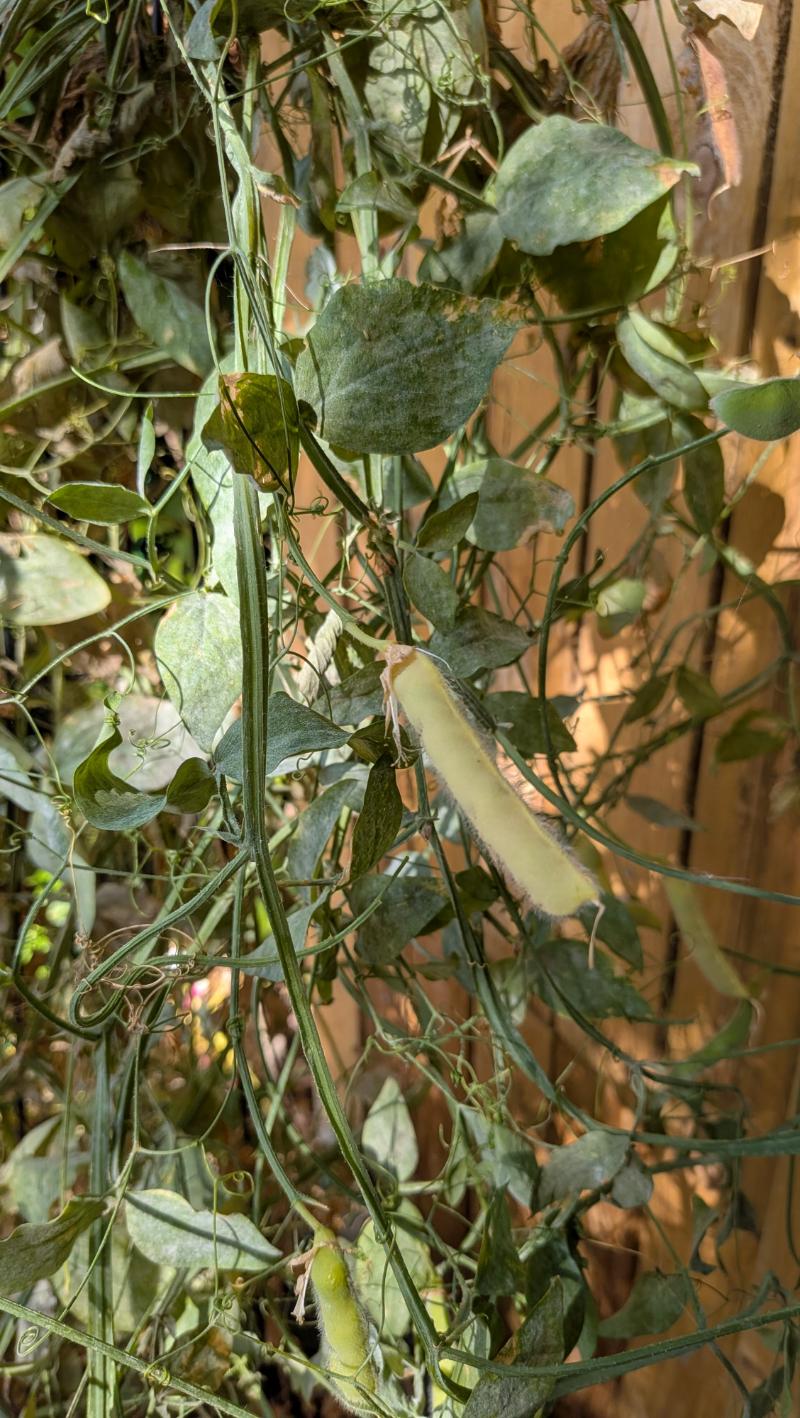
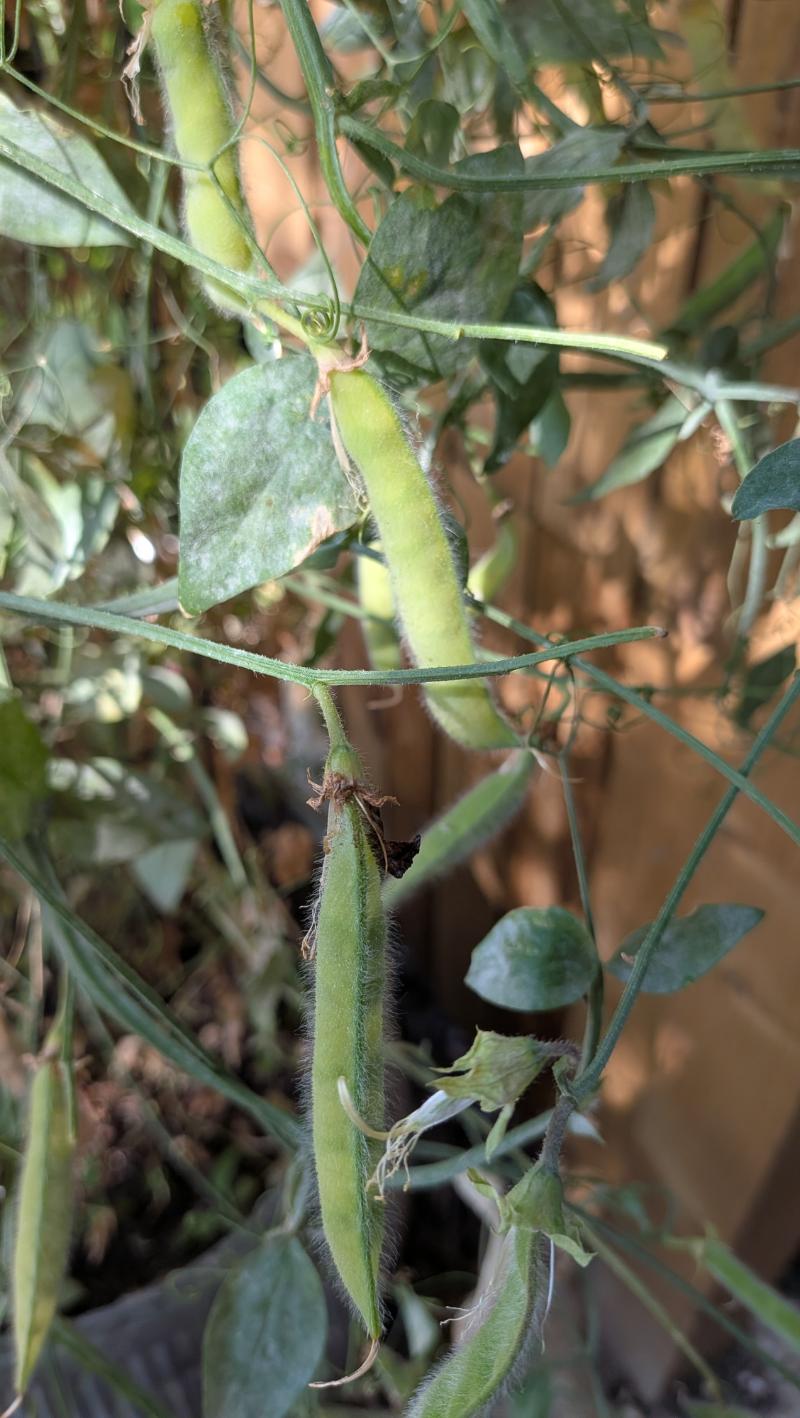
You need to leave the pods on the plant until they have turned brown, dried out and papery. This usually happens towards the end of summer or into autumn, depending on the weather and the variety of sweet pea you’re growing.
Don’t be tempted to pick them too early, as the seeds need time to mature properly.
How to Collect Sweet Pea Seeds
Collecting sweet pea seeds couldn’t be easier. You just need a little patience and somewhere dry to store them.
1. Leave the seed pods to mature
Once your sweet peas have finished flowering, leave some of the pods on the plant. Let them turn brown and papery, which is a sign that the seeds inside are ready to harvest.
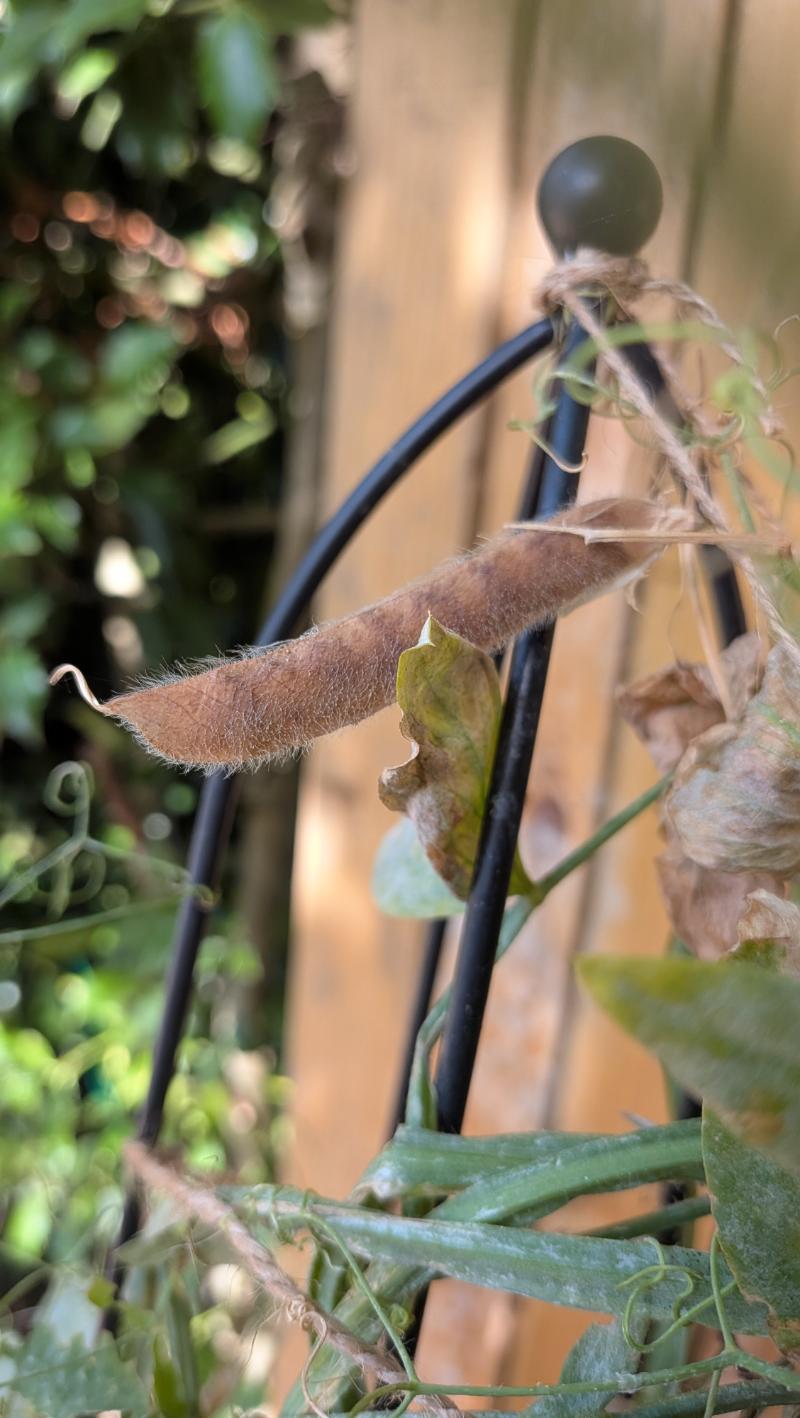
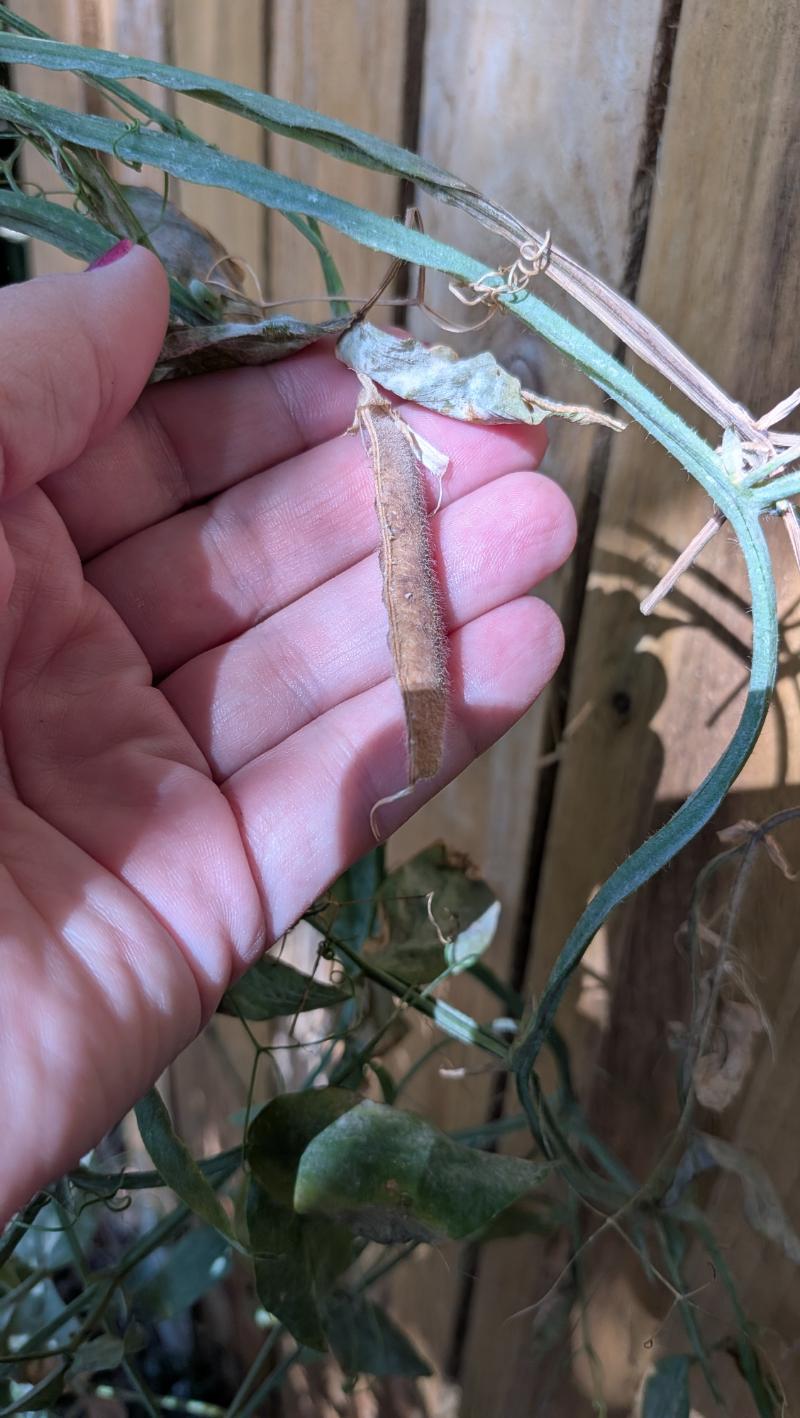
2. Pick the dry pods
Choose a dry day to collect your pods. If they’re brown and starting to look brittle, they’re usually ready. If the weather is wet, keep an eye on them so they don’t become mouldy or start splitting before you get to them.
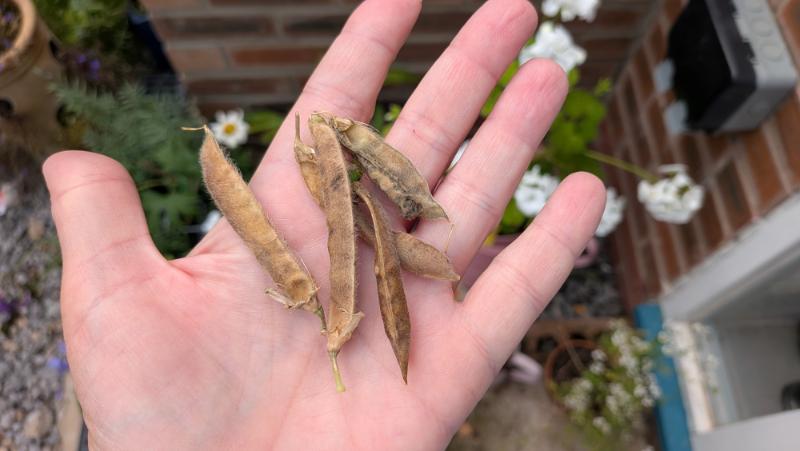
3. Remove the seeds
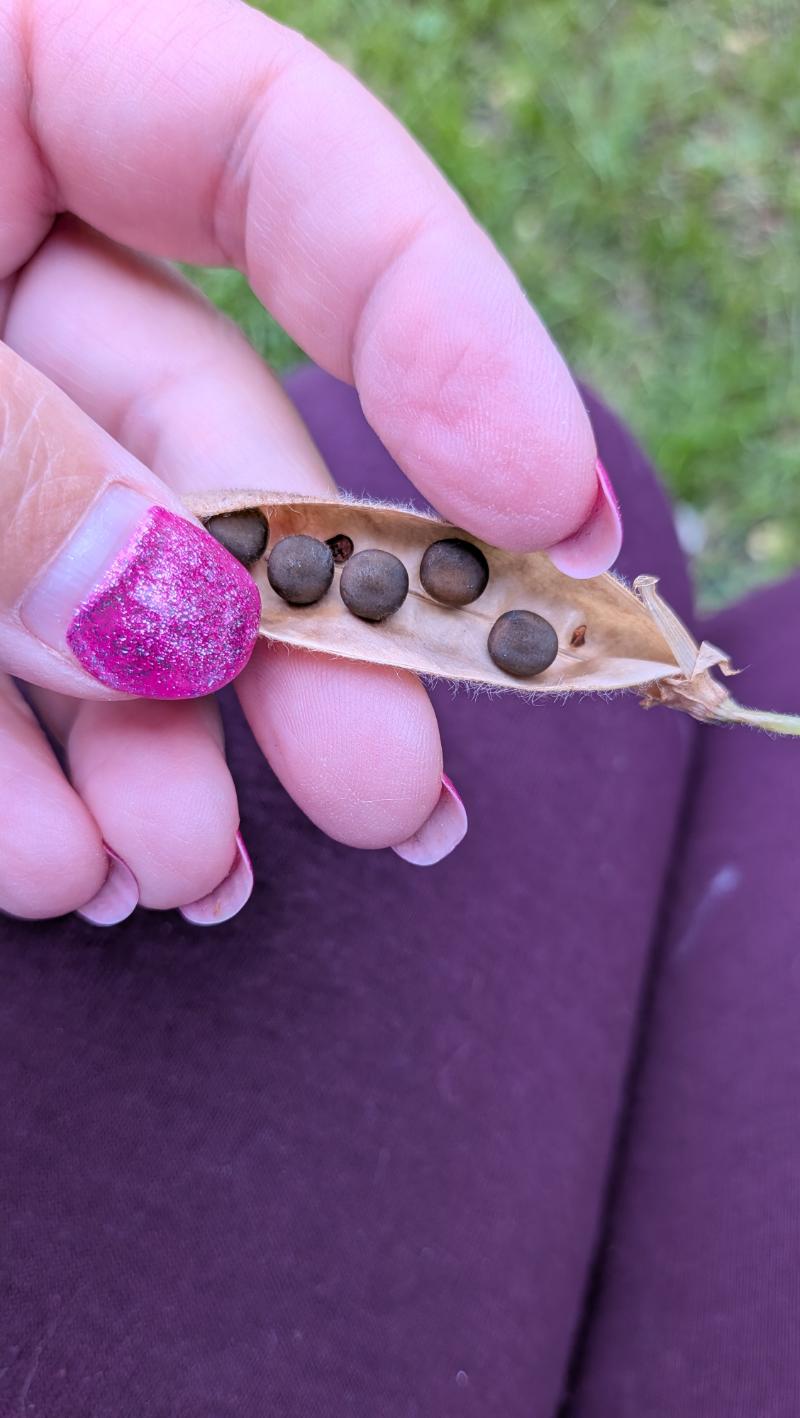
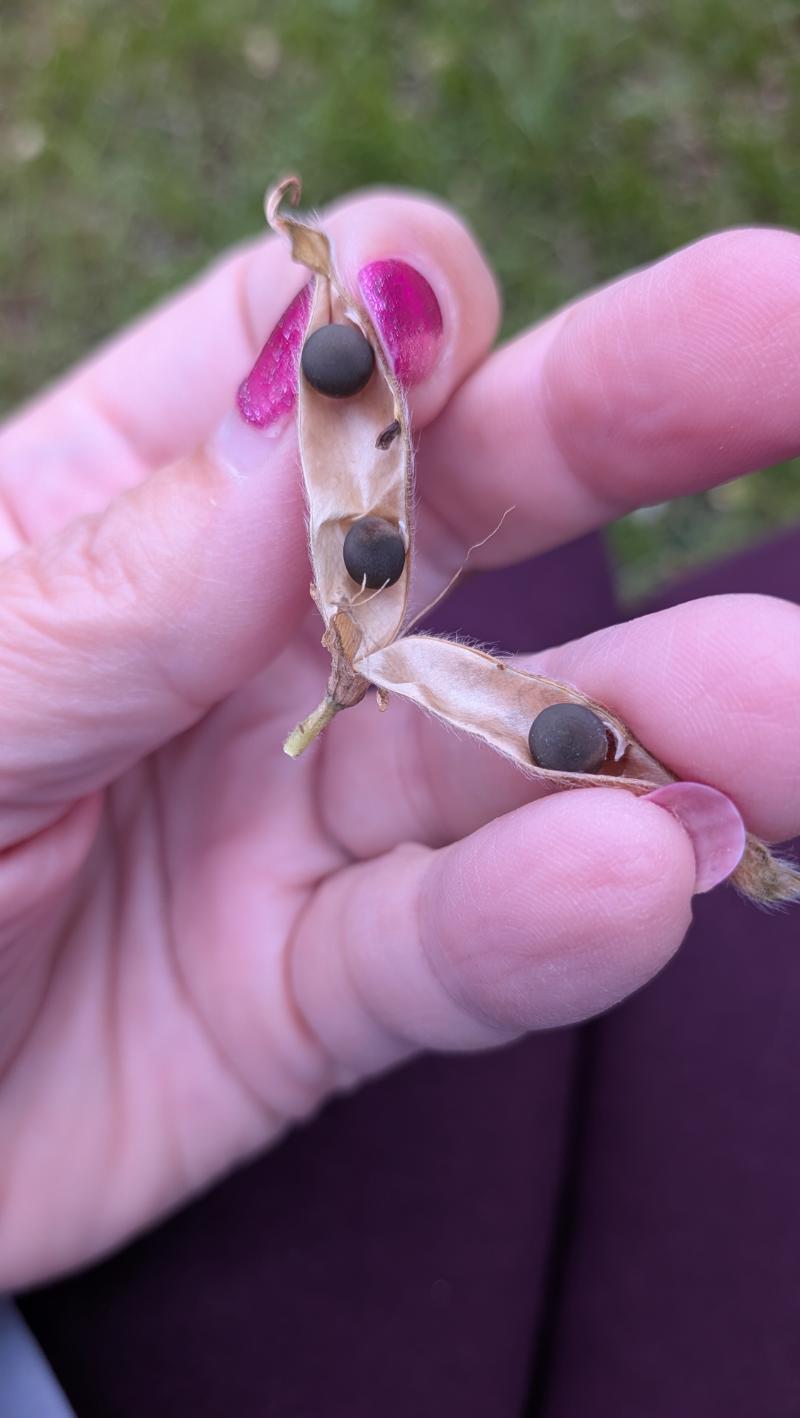
Open the pods carefully and tip out the seeds. Sweet pea seeds are usually roundish and can vary in colour, from pale brown to dark brown or almost black.
It’s always a little exciting to see how many seeds you’ve managed to collect from just a few pods!
4. Let the seeds dry
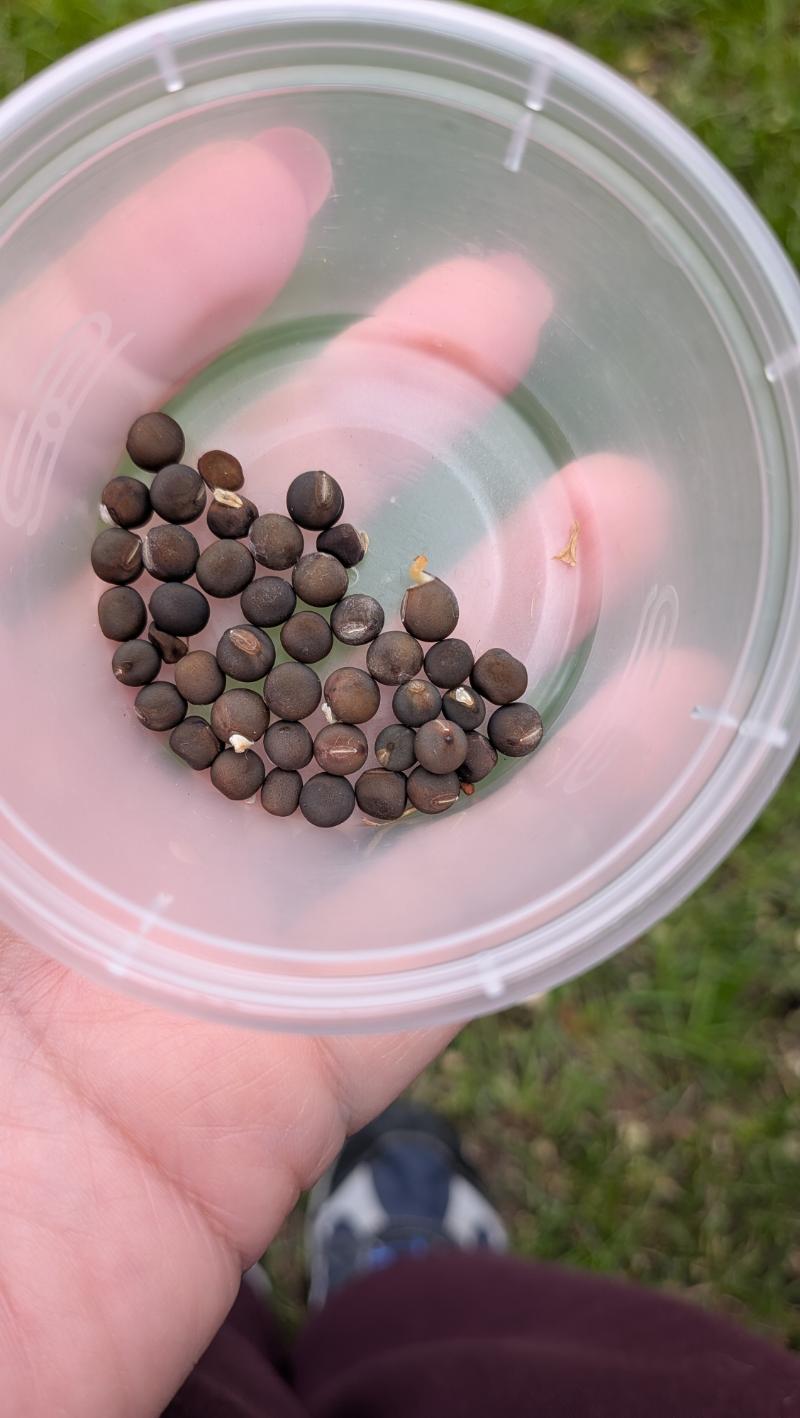
If the seeds aren’t completely dry, spread them out on a piece of paper in a dry, well-ventilated place, away from direct sunlight. Make sure they are thoroughly dry before storing them, as any remaining moisture can cause them to go mouldy.
5. Store them until next year
Once dry, place your seeds in a labelled paper envelope. Include the variety and the date you collected them, if you know them.
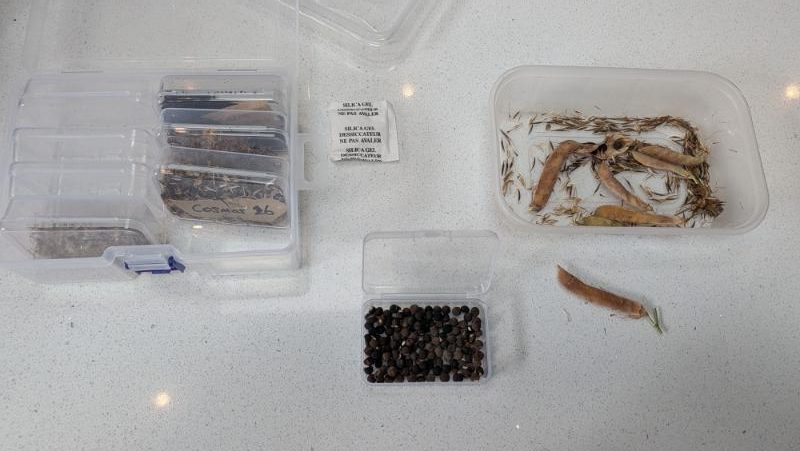
Keep the envelope somewhere cool, dry and dark until you’re ready to sow them. A cupboard indoors is ideal, provided it isn’t damp or too warm. I like to keep them in these little plastic tubs, but I do pop a silicone sachet in with them to keep them dry.
When Can You Sow Your Sweet Pea Seeds?
One of the lovely things about sweet peas is that you can sow them at different times of the year.
Many gardeners sow sweet peas in autumn, usually in October or November, to give them a head start for the following summer. You can also sow them in late winter or early spring, from January to March.
I planted these immediately that I had collected them.
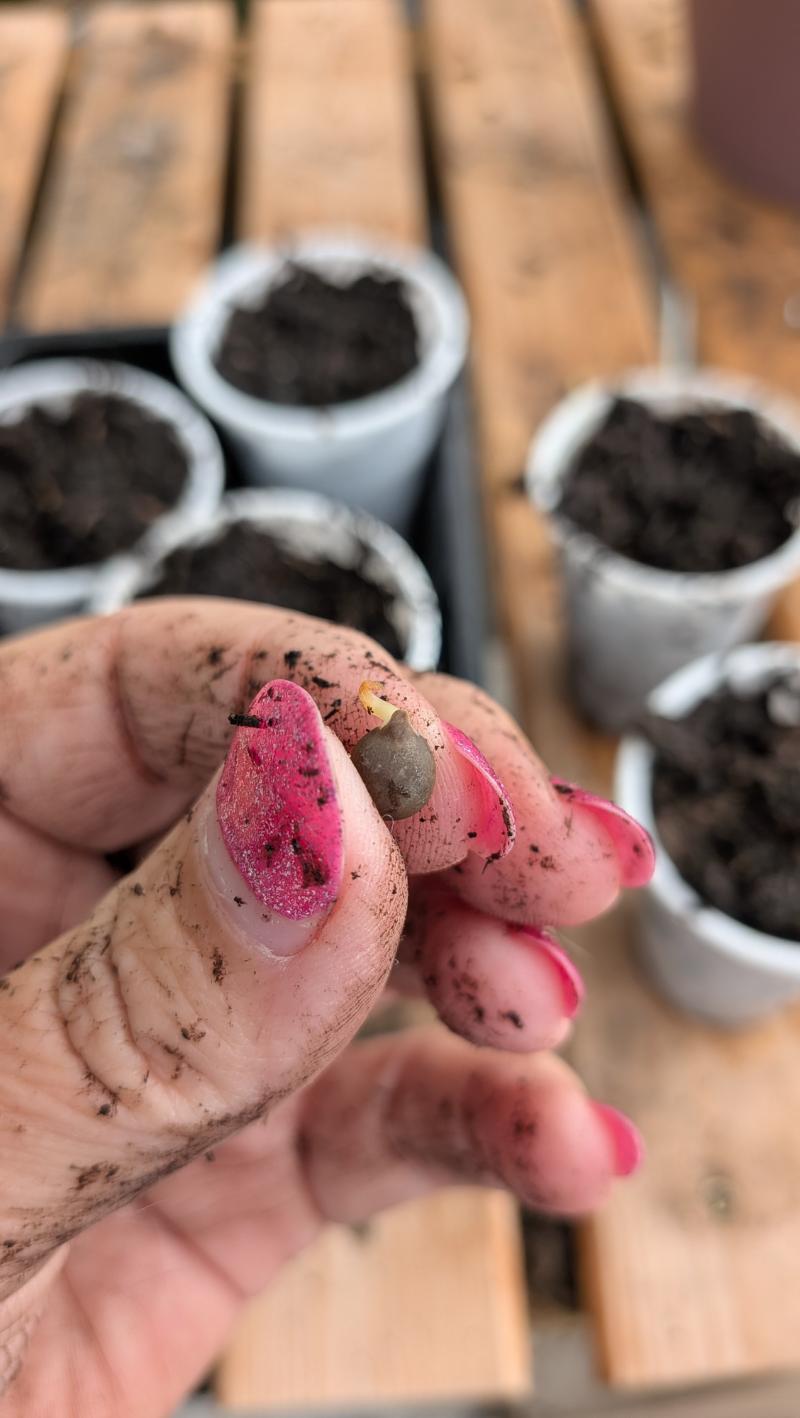
Autumn-sown plants will need a cool, bright, frost-free place to grow through the winter, while spring sowings are ideal if you don’t have much space to overwinter seedlings.
Before sowing, you may want to soak the seeds overnight to help soften their hard outer coating. However, avoid soaking them for too long, and don’t use seeds that are damaged or showing signs of mould.
To be honest I have never soaked them and have always had success. These are the same sweet peas two months later. I have pinched out the tips to make them bushier.
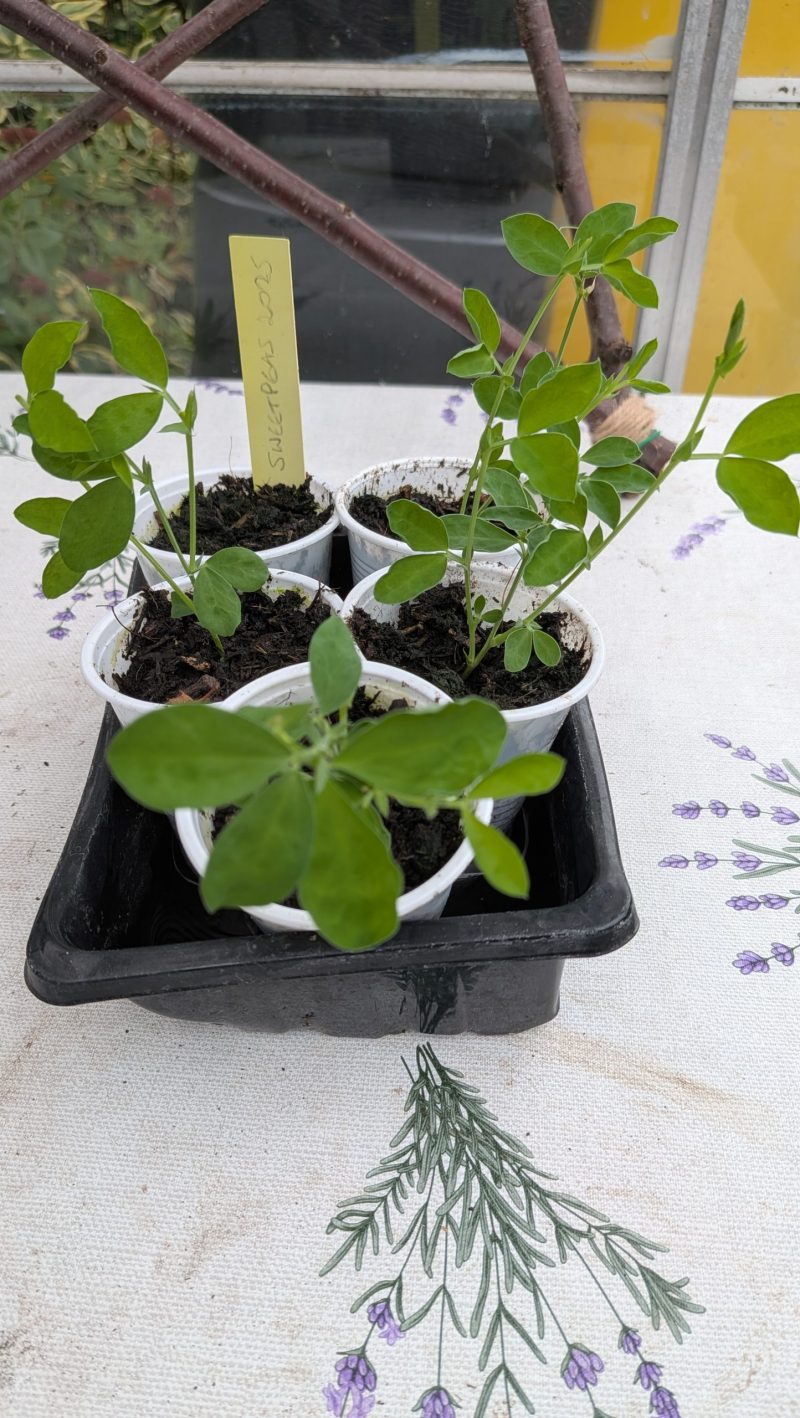
Sweet peas are generally easy to grow, and with a little care, you’ll have lovely flowers to enjoy the following summer.
Can You Collect Seeds from All Sweet Peas?
You can collect seeds from most sweet pea varieties, but there is one thing worth remembering. If you’ve grown several different varieties together, they may have cross-pollinated, so the flowers grown from your saved seeds might not look exactly like the original plants.
If you’ve grown named varieties and want to keep their characteristics as reliably as possible, buying fresh seed from a reputable supplier is the safest option.
It’s also worth remembering that seeds collected from hybrid varieties may not come true to type.
Why I Love Collecting My Own Seeds
There is something very satisfying about saving seeds from the garden rather than buying everything new each year. It’s economical, easy to do and gives you a lovely little supply of seeds ready for the next growing season.
Sweet peas are particularly rewarding because a handful of seeds can produce a summer full of beautiful, fragrant flowers. You can grow them up obelisks, wigwams and trellis, or train them along supports in a cutting garden.
I also think collecting seeds is a lovely way to make the most of your garden. Rather than letting the last flowers of summer go to waste, you can turn them into next year’s display.
So, if you have sweet peas growing in your garden this year, remember to leave a few flowers to form seed pods. Let them dry, collect the seeds and tuck them away somewhere safe.
You’ll be ready to start growing another batch of beautiful sweet peas before you know it!